Garment Folding Machine Suppliers: A Buyer's Due Diligence Checklist
The purchase order is the easy part. What happens at 2 a.m. on the Friday before a shipping deadline, when a folder has stopped mid-cycle and the garment inside is half folded — that is the part worth planning for.
Garment folding equipment is not a consumable. It runs every shift for years, and the supplier on the invoice becomes part of your daily operation whether or not you intended that relationship. Buyers who treat the supplier selection as a price comparison exercise tend to discover the operational cost later, one stopped line at a time.
This is a working checklist, in the order the checks should happen. It is organised around one idea: each item below is a document, a test, or a clause you can actually obtain — not an impression you form from a website.
Before comparing configurations, confirm that the company on the quotation is the company that builds the equipment. The folding machine trade contains manufacturers, trading companies, and a mixed category in between — companies with their own assembly capability that buy frames and control units from other plants. All three can present a credible product page.
Three checks separate them:
Registered identity and production address. Ask for the legal entity name, the registered address, and the address where the machine will actually be built and tested. A company whose factory address is a residential or commercial unit rather than an industrial building is telling you something useful about its operations.
Who owns the engineering. Non-standard fold sequences, unusual bag dimensions, and line integration require engineers who can change the mechanism, not only technicians who can assemble one. Ask which engineering role approves a custom specification and how many people hold that role.
Parts origin. Ask which wear components are produced in-house — conveyor belts, suction cups, sealing blades, mechanical assemblies — and which are purchased. This question is more revealing than it appears, because the answer tells you what the company considers its core capability.
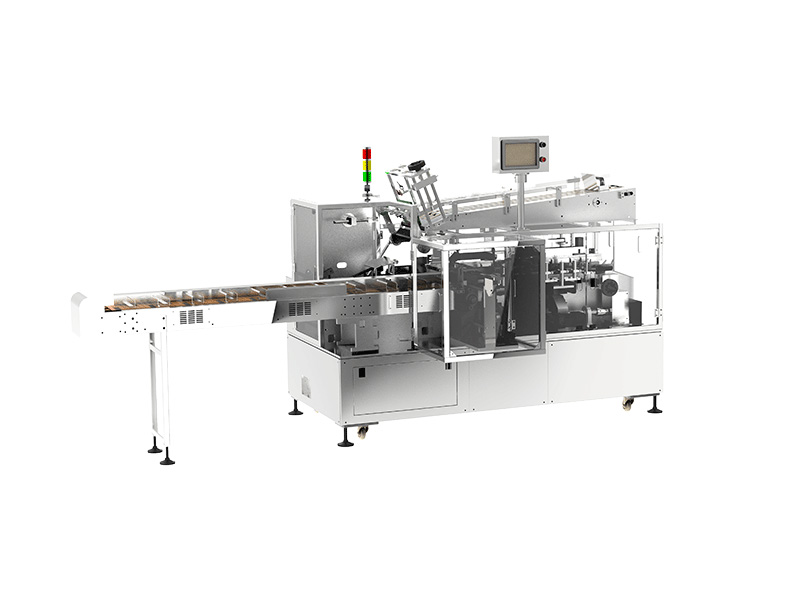
UBL operates as a factory-direct manufacturer at its Dongguan production facility, where garment folding and packing machines are designed, assembled, and calibrated, with wear parts produced in-house and shipped direct rather than through a distribution chain.

Most buyers request a quotation and a product catalogue. Five additional documents shorten the decision considerably, and all five are things a manufacturer with real engineering capacity can produce without effort.
1. A dimensional compatibility sheet — not a marketing table, but the actual working envelope: garment length and width before folding, folded output dimensions, folded pack dimensions, and the tolerance around each figure. A manufacturer who publishes tolerances is telling you where the machine's accuracy degrades.
2. A wear parts list with quantities and lead times — the components consumed in normal operation, how often each is replaced, and whether each is stocked or made to order. This list doubles as the spare parts kit's contents list.
3. An interface drawing for any machine that will connect to your existing equipment — conveyor heights, control signals, power supply, and air requirements at the point of connection.
4. A warranty statement covering what is included, what is excluded, and who pays for freight in each case. Exclusion lists are where warranty quality becomes visible.
5. A service terms summary with a stated response figure for operational issues and a stated path for on-site attendance.
A supplier who cannot produce items 1, 3, and 4 is telling you something about engineering documentation. On a machine expected to run for years, that matters as much as the machine's headline capacity.

A folding machine is designed around a specific assumption about what it is folding. Buyers who identify the mismatch early avoid the expensive version of the same lesson.
Four things decide whether a given folder suits a given product:
UBL's HMI stores up to 99 parameter sets, so fold configurations for different accounts can be retained and recalled without mechanical reconfiguration between runs.
A trial that confirms the machine is possible tells you little. A trial structured to fail tells you where the limits are, which is the information you actually paid for the trial to obtain.
A workable trial protocol:
At UBL, garment sample trials run before the specification is locked: you send the garments (and bags, if you use a specific format), you state the fold and labelling requirements, and the complete cycle is recorded for review before any order is placed. Trials and the requirement assessment carry no purchase obligation.
Delivery, installation, training, and parts language tends to be written for the sales conversation. Translated into operational terms, each clause answers a question about uptime.
Delivery. Standard configurations typically leave the factory shortly after contract signature. Custom configurations — a non-standard fold sequence, an unusual bag dimension, an integrated line setup — run considerably longer, commonly around three months from order to delivery, covering layout planning, build, testing, and freight. At UBL, catalogue machines ship the day after contract signing, and custom builds with two layout proposals take approximately three months.
Installation and calibration. Ask whether positioning, connection, and calibration to your floor layout sit inside the purchase price, and what the scope covers when the machine connects to existing equipment. UBL includes installation and calibration in the purchase price, with the installation team handling the mechanical and electrical connections for line-integration projects.
Training. "Training provided" is not a commitment. A useful one specifies content and duration: basic operation, parameter adjustment, routine maintenance, and how long a new operator needs before working unsupervised. UBL's operator training runs about 30 minutes to basic proficiency, with two to three days to independent operation.
Parts availability. Consumables wear out by design — blades blunt, belts stretch, suction cups lose grip, bag-opening parts deform. What matters is the interval between failure and replacement. UBL recommends ordering a consumable parts kit alongside the machine, priced more favourably at order stage, which places the highest-turnover components on your shelf before they are needed; non-stocked items ship from the factory.
Two quotations for the same requirement rarely cover the same scope, which makes the numbers look more different than they are. Before comparing, normalise what each price includes:
Once normalised, price comparison becomes meaningful — and a supplier who answers all five questions without hedging is telling you how the transaction will run.

Most equipment relationships are evaluated on purchase and installation. The longer question is whether the machine stays supported in year four, and it is rarely raised during negotiation.
Three things determine the answer:
The parts question is also a lifetime-cost question rather than a purchasing one. A supplier holding stock for a machine built years ago can often service it faster than a supplier who has moved on.
| Warning sign | What it usually indicates |
|---|---|
| Declines a sample trial, offers only a demo video | The machine may not handle your garments, or the supplier would rather not find out on video |
| No stated after-sales response time | Support is informal, and informal support is slowest when you need it |
| Cannot supply spare parts independently | A trading company in the middle — parts travel a chain that adds lead time and cost |
| Price sits well below the market with no clear explanation | The saving comes out of components, build quality, or after-sales scope |
| No references, no documented installations | Limited deployment history; unproven in a real production environment |
| Cannot adjust fold sequence or bag dimensions | A fixed catalogue product that will not follow your production requirements |
Will you run a trial on our garments before we order? A serious manufacturer answers yes without hesitating. The answer tells you whether they are confident in the machine and whether they can run trials on demand.
Can you send a dimensional compatibility sheet with tolerances? This separates a manufacturer who has engineered the machine from one who has configured it. Tolerance figures are the useful part; nominal ranges alone hide where accuracy degrades.
What is your after-sales response commitment, in writing? Ask for a specific figure rather than a general assurance, and ask what the escalation path looks like when a remote session does not resolve the issue. UBL commits to a 6-hour remote response on operational issues, with field engineers dispatched for mechanical faults requiring physical repair.
Where are spare parts held, and what is the lead time on a critical wear part? If the answer is that parts ship from the factory, follow up with the realistic timeline to your plant, and ask whether a parts kit can be ordered with the machine.
Do you have customers in our industry we could speak to? References from a comparable sector and production setup are the most useful external check on a supplier's claims. A supplier without references either has a thin installation history or would rather not have those customers scrutinised — neither reading is encouraging.
How long does this machine stay supported after the warranty period? Ask which model it is, what the control platform is, and what documentation you receive. The answer determines how serviceable the machine is in year four.
Who handles non-standard requirements — fold program, bag format, line integration? Whether that sits with an in-house engineering team or gets passed onward determines how quickly your future changes get answered.
How long does delivery take, and what does installation include? Match the timeline to what is actually being ordered, since standard and custom configurations differ substantially. For line integrations, ask how the connection to existing equipment is handled.
Why do published cycle rates differ from what we measure on the floor? Catalogue rates are normally measured on a reference garment with standard staffing under continuous running conditions. Actual output depends on garment mix, how often fold programs change within a shift, how many operators are on the station, and whether upstream work feeds the machine at a steady rate. Ask for the rate calculated against your garments and your staffing model instead of a catalogue figure — UBL's fully automatic garment folding and packaging machine and multi-functional folding machine pages list published capacities and the garment ranges they are rated for, which give you a baseline to compare other quotations against.
Should we buy one integrated machine, or separate folding and bagging stations? It depends on where the bottleneck sits and what volume you run. An integrated folding-and-bagging line removes transfer steps and needs less floor space; separate stations give independent control of each stage and are easier to staff flexibly at lower volumes. Describe your order mix and shift pattern, and ask how the supplier would configure it — the answer says more about how they think about your operation than a specification sheet does. The three configurations we build — single-station, multi-functional, and fully automatic — differ mainly in how much of the cycle is automated.
How long does a full evaluation usually take, end to end? A focused evaluation — company verification, document review, trial, and commercial terms — typically runs a few weeks from first contact to order, with the trial taking the longest because it depends on shipping garments. Custom engineering adds lead time before production starts, which makes requirement clarity at the beginning the main lever on total elapsed time.
What happens if the machine underperforms after installation? The remedy depends on what was documented. If the shortfall is in fold quality, dimensional range, or pack format and the agreed specification was written down, it is a specification question with a defined answer. If the shortfall is in output rate, the conversation gets harder unless a realistic rate was calculated against your garments before the order — which is the argument for having the supplier model your production rather than quote you a catalogue number.
The fastest way to a defensible decision is to describe the job rather than the machine. Send garment measurements at the smallest and largest sizes, the fold specification, target output per shift, bag format, label position, and your floor layout constraints. UBL will state plainly whether a standard, an upgraded, or a fully custom configuration fits — and where a custom build is the answer, you receive two layout proposals to compare rather than a single quotation with no alternatives.
Reach the team through our company page to begin.

 Guangdong Huanlian intelligent Packaging Group Co., LTD
 86-15915757872
 86-13602308576
 sales@huanlianauto.com
 No. 7, Silver Lake Road, Sangyuan Industrial Zone, Dongcheng District, Dongguan City
 Back to top


 86-15915757872