

Food Carton Folding Machine: Box Formats, Speed Matching and Line Integration for Food Producers
Somewhere in almost every food plant, there is a folding table that quietly sets the ceiling for the whole operation. Front-end capacity keeps climbing — new mixers, a second oven, an extra freezing tunnel — yet the packaging department still opens every carton by hand. A dumpling line that needs six or eight people folding and loading boxes. A bakery where half the packaging crew spends the shift creasing snap-lock bases for shelf-ready cartons. A confectionery packing hall where output sags every afternoon because hands tire faster than machines. When sales grow, the distance between what the plant can make and what it can pack only widens.
A food carton folding machine — also sold as a carton erector or box forming machine — closes that gap. It draws flat blanks from a magazine and delivers finished, load-ready boxes at a rate no folding team can sustain across a full shift. This guide is written for plant managers and purchasing teams at food manufacturers. It covers what the machine actually does, the four carton formats it can be configured for, how to size it against your output, and how it connects to the cartoning machine that completes the line.
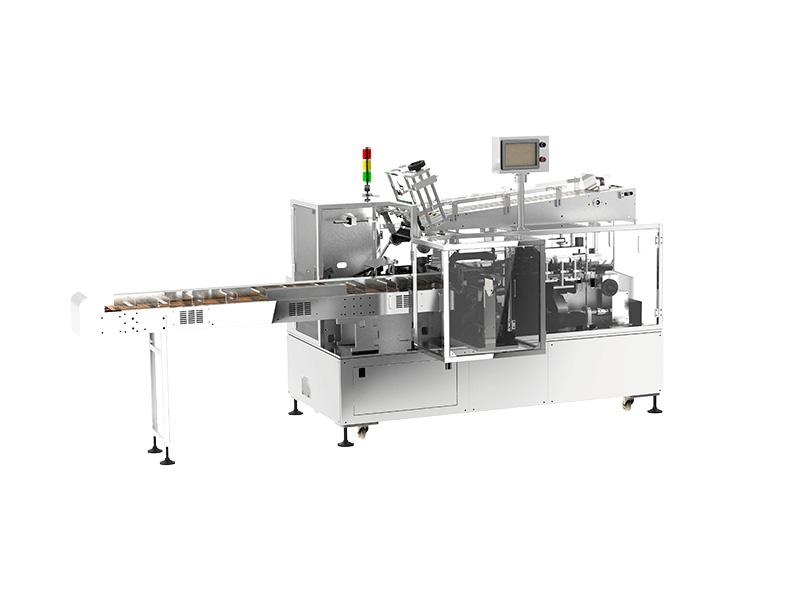
The machine performs one operation, repeatedly and precisely. A vacuum pick-up lifts a flat blank from the magazine, forming stations fold the side panels and bottom flaps into position, and the finished box travels out on a conveyor, open and waiting for product. Depending on box style and machine configuration, output typically runs from 20 to 60 boxes per minute; the exact figure for your carton is confirmed during pre-sale testing.
It is worth drawing a clear line between a folding machine and a cartoning machine. The folder handles erection only. Loading and closing happen afterward — either at a manual packing table or on a downstream cartoner. Some plants run the folder as a box supplier to a manual loading station; others link it directly to a cartoner to build a fully automated secondary packaging line. Product characteristics, volume and floor layout decide which arrangement makes sense.
One reference point on the wider trend: China's National Bureau of Statistics reports that national output of packaging machinery reached 1.63 million units in 2024, a 24.5% year-on-year increase. Food plants everywhere are moving box erection off the manual roster, and the equipment market is scaling to meet that demand.
Food secondary packaging relies on four main carton styles. Each demands its own folding sequence, so a machine is configured for a specific format — the mechanics that lock a snap-lock base have little in common with the ones that tuck a flap or bond one with glue.
Known interchangeably as the crash-lock or 1-2-3 bottom, this format interlocks its base flaps mechanically as the blank is erected — no adhesive involved. Mechanical fingers press the interlocking tabs home during forming, so the box leaves the machine with its base already locked. UBL snap-lock bottom carton folding machines run at 40 to 60 boxes per minute, which places this configuration among the higher-speed options in the category. Food applications center on cartons that carry real weight in the base: tray-packed frozen dumplings and fish fillets, bakery cartons for cookies and pastries, and multi-pack confectionery boxes.
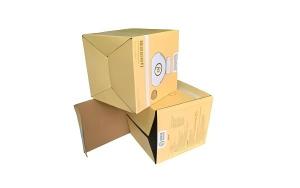
The standard retail format across bakery, snack and confectionery shelves. Base flaps are creased, positioned and tucked into the box body — straight tuck-end flaps fold the same direction on both panels, reverse tuck-end flaps fold in opposite directions, which saves board and suits certain shelf displays. UBL tuck-end carton folding machines also run at 40 to 60 boxes per minute. Typical uses: cookie and biscuit cartons, chocolate bar retail boxes, energy bar packs and single-serve snack cartons.

Here a hot-melt applicator lays a glue bead on the base flaps before folding and pressing. The sealed base adds tamper evidence and rigidity, which is why retail buyers sometimes specify it. Cycle time runs slightly below snap-lock and tuck-end figures because the glue needs a moment to set under pressure. Common among premium confectionery, infant formula and export-oriented producers.
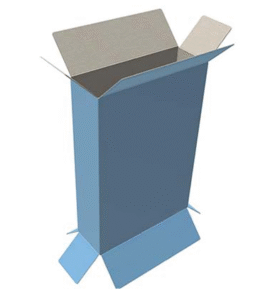
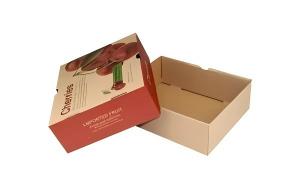
A separate base and lid, each formed from its own blank, so the machine carries a different mechanical configuration. UBL two-piece rigid box folding machines operate at 30 to 40 boxes per minute. This is the format for premium chocolate gift boxes, high-end bakery packaging and seasonal gift sets where the carton itself is part of the product's appeal.
Three decisions shape the specification.
Box type comes first. The folding mechanism is geometry-specific: a snap-lock machine cannot run tuck-end blanks without a module change, and a glue-seal machine must carry the hot-melt system. Plants running mixed formats should configure the machine around the format that covers the largest share of volume, then handle the remainder through changeover parts. Our carton format comparison guide breaks down the trade-offs in detail.
Throughput follows from a simple calculation:
Required rate (boxes/min) = daily output ÷ number of shifts ÷ net production hours per shift ÷ 60
Count net hours conservatively — deduct changeovers, breaks, sanitation and short stops; 6 to 7 hours per shift is a realistic planning figure. A plant targeting 20,000 cartons per day on two shifts needs a sustained rate of roughly 24 boxes per minute. A snap-lock machine running at 50 boxes per minute delivers about 24,000 boxes across eight productive hours, leaving margin for changeovers and minor stoppages. Lower-volume operations may find a compact or semi-automatic configuration the more economical route.
Downstream matching determines the line layout. When the folder feeds a cartoner directly, formed boxes transfer automatically from the folder outfeed to the cartoner infeed — no human hands between the two. The two machines must be synchronized: a folder that outruns the cartoner fills the transfer conveyor with stacked boxes, while a slow folder leaves the cartoner idle. During the pre-sale technical review, UBL maps both machines' speeds and typically sets the folder 10 to 15 percent above the cartoner's input requirement, so the cartoner never waits for a box.
Frozen food. Tray-packed dumplings, fish fillets and prepared meals use snap-lock bases; the folder feeds a cartoner that loads the tray and closes the carton. Our frozen food cartoning guide covers this segment in depth.
Bakery and snacks. Cookies, cakes and pastries run mostly in tuck-end cartons, with the folder supplying either a manual loading station or an automated cartoner. The 40-to-60-box-per-minute range covers most mid-size bakery line requirements. See our bakery cartoning and snack cartoning handbooks for the loading side.
Tamper-evident applications. Premium confectionery, infant formula and nutritional supplements increasingly specify glue-sealed bases at the request of retail buyers.
Premium gifting. Two-piece rigid boxes for chocolate gift sets and seasonal programs, where presentation quality justifies the dedicated configuration.
Carton geometry problems travel downstream. A base flap that is not fully seated at the folding station misaligns product loading, interferes with closing, and may fail in distribution. Manual folding varies with each worker's strength, technique and fatigue; a folding machine applies the same force on every cycle, so box number 20,000 matches box number one.
For plants audited under third-party food safety schemes, this consistency carries documentation value. Machine folding generates a controlled, recordable process; manual folding depends on training and sampling inspection, and the paperwork burden is heavier. UBL folders include forming sensors that verify each box — interlocks engaged on snap-lock, flaps seated on tuck-end — and stop with an operator alert when a box forms incorrectly. An optional vision system can check blank presence, print registration and dimensions before forming, feeding quality data into production reports. Recommended where carton appearance is part of the retail proposition.
The highest-efficiency layout links folder and cartoner by conveyor. The folder erects, the cartoner loads and closes, and the floor space between them shrinks to a transfer section. Speed synchronization, as described above, keeps flow stable — the 10-to-15-percent folder margin is the standard target UBL configures during pre-sale review.
Plenty of plants take a phased path instead: automate folding first, keep manual loading, then add the cartoner once volumes justify it. Because UBL folders and cartoners are engineered as a matched pair, that upgrade does not require rethinking the line. Both product families are shown on our carton folding machine and cartoning machine pages.
Blank geometry, board thickness, crease depth and flap dimensions all decide how a blank feeds and forms. When packaging designers finalize a carton without consulting the equipment side, forming problems surface after tooling is cut — an expensive place to discover them. UBL's engineers review blank specifications during the pre-purchase stage and suggest geometry adjustments that improve forming reliability without changing the box's look or function. That review is part of the sample trial, at no cost, and draws on adaptation work across hundreds of carton formats in food categories.
The direct saving is the folding roster itself. A manual station typically absorbs two to four workers opening blanks, folding bases and staging boxes; the machine replaces that headcount at 40 to 60 boxes per minute, and those workers move to loading, inspection or other roles where their judgment adds value.
Two second-order effects compound over time. Machine-folded boxes are geometrically identical across the shift, so the closing station receives uniform inputs and produces uniform seals. And output becomes predictable: the machine delivers the same rate at hour eight as at hour one, which makes production planning and downstream capacity management meaningfully easier.
Combining direct labor savings with reduced downstream variation, food manufacturers on two shifts commonly see payback in 10 to 16 months; three-shift or high-volume operations often recover the investment in under 12 months. These are conservative planning figures — actual results depend on local labor costs and order volume.
Can one machine handle multiple box sizes? Yes. Within a given box style, dimension changes are made with handwheels on the forming modules and recalled from the HMI; changeover commonly takes under ten minutes. Switching between box styles requires a forming module change.
Does a snap-lock bottom machine need adhesive? No. The interlocking tabs carry the base load mechanically, and the folder engages them during forming. Glue-seal machines carry the hot-melt system instead.
Can the folder feed a cartoner directly? Yes. UBL folders and cartoners are designed as a matched pair. Many plants also run the folder with a manual loading station as a semi-automatic arrangement, and some operate standalone folders where product specifications make automatic cartoning impractical.
What happens if a blank feeds misaligned? Blank sensors detect the misfeed and stop the cycle before it reaches the forming station. The operator clears it and restarts. With in-specification blanks, such events are infrequent.
How long does a size changeover take? Under ten minutes for dimension adjustments within the same box style — handwheel adjustment plus parameter recall from the HMI. Style changes via module swap run about half an hour.
What board weights and blank sizes are supported? Paperboard from 250 to 600 gsm covers most food secondary packaging, and the magazine accommodates blank sizes from roughly 50 × 50 mm up to 600 × 800 mm depending on model. Confirm both against your actual blank during pre-sale review.
How often is the magazine reloaded? Standard magazines hold 200 to 500 blanks depending on thickness — a reload every 20 to 30 minutes in continuous running. High-capacity magazines extend to about 1,000 blanks, and loading height is set to your operators' ergonomic requirements during the technical review.
Send your carton blanks and product specifications to UBL's factory in Dongguan. The engineering team runs a test cycle on the relevant configuration and returns video documentation — folding quality, cycle speed, any format adjustments made — along with a written report. The trial is free of charge and carries no purchase obligation; you are equally welcome to visit and watch the run in person.
Standard configurations can be dispatched promptly after contract signing; custom configurations for non-standard dimensions or special integration requirements are typically available within about three months of design confirmation. Installation and commissioning are included in the purchase price, on-site operator training takes about two hours, and most operators run the machine independently within two to three production shifts.
To discuss your carton format, box dimensions and output targets, contact the UBL team at helen@huanlianauto.com or visit ublpack.com.
The folding machine rarely gets the attention the cartoner does, yet it sets the conditions for everything after it. Consistently formed boxes let the cartoner run at full speed with few jams; inconsistent boxes tax every station downstream. For food manufacturers automating secondary packaging for the first time, the folder is the sensible opening move — mechanically simpler, lower-cost, and quick to integrate. Once it is producing uniform boxes, the cartoner, labeler and case packer become straightforward upgrades on a stable base.
Hot news
2024.12.19
2026.09.22
2026.09.22

 Guangdong Huanlian intelligent Packaging Group Co., LTD
 86-15915757872
 86-13602308576
 sales@huanlianauto.com
 No. 7, Silver Lake Road, Sangyuan Industrial Zone, Dongcheng District, Dongguan City
 Back to top


 86-15915757872


