The Snack Cartoning Machine Handbook: Secondary Packaging for Candy, Biscuits, and Nuts
Most snack plants do not decide to buy a cartoning machine because of a brochure they picked up at a trade fair. The decision usually ripens on the production floor, at the point where the line slows down for reasons that have nothing to do with the oven, the mixer, or the wrapping machine. A granola bar maker watches a pallet of wrapped bars stack up at the infeed of a manual packing station while four people fold blanks by hand, load product one row at a time, and close flaps with tape guns. A biscuit factory misses a distribution deadline because the hand-packing crew simply cannot match the output of the flow wrapper feeding it. Manufacturers who have run manual secondary packaging for years recognize the pattern immediately: the faster the primary line runs, the wider the gap between what it produces and what the back end can swallow. That gap does not shrink on its own; it grows with every increase in sales volume.
This guide is written for production managers, plant engineers, and purchasing decision-makers in the snack food industry. It explains what a snack cartoning machine actually does, how to match one to your product portfolio, and which details to verify before signing an order.
Snack food is one of the broadest and most competitive categories in packaged food, covering biscuits and crackers, chocolate and confectionery, energy and protein bars, granola, muesli, nuts and dried fruit, single-serve chips, and multi-pack variety boxes. Every one of these subcategories ends its production journey in some form of carton, tray, or display box.
The scale of the opportunity is well documented. According to Research and Markets, the global snack food packaging market was worth roughly USD 29 billion in 2024 and is expected to climb to about USD 30.6 billion in 2025, with growth accelerating toward a projected USD 43.1 billion by 2029. Data Bridge Market Research puts the current figure at around USD 24.2 billion for 2025 and forecasts USD 37.7 billion by 2033, driven by a compound annual growth rate of roughly 5.9 percent. Industry analysts agree that Asia-Pacific currently holds the largest regional share — Data Bridge estimates it at about 38.5 percent — supported by rising urbanization, expanding e-commerce, and a fast-growing base of packaged snack consumption.
Underneath these headline numbers sits a quieter but equally important trend: the machinery that puts snacks into cartons is itself a growing market. The global packaging machinery market was valued at approximately USD 61.9 billion in 2025 and is projected to approach USD 108.7 billion by 2033, a compound annual growth rate of around 7.3 percent, according to Data Bridge. For a snack manufacturer, the practical takeaway is that automation of the secondary packaging stage is no longer an experiment; it is the direction the entire industry is moving.
Behind every growth driver — more SKUs, shorter production runs, faster product turnover, and relentless retail shelf competition — lies the same packaging requirement: cartons must be formed, filled, and closed faster, more flexibly, and more consistently than a manual station can deliver.
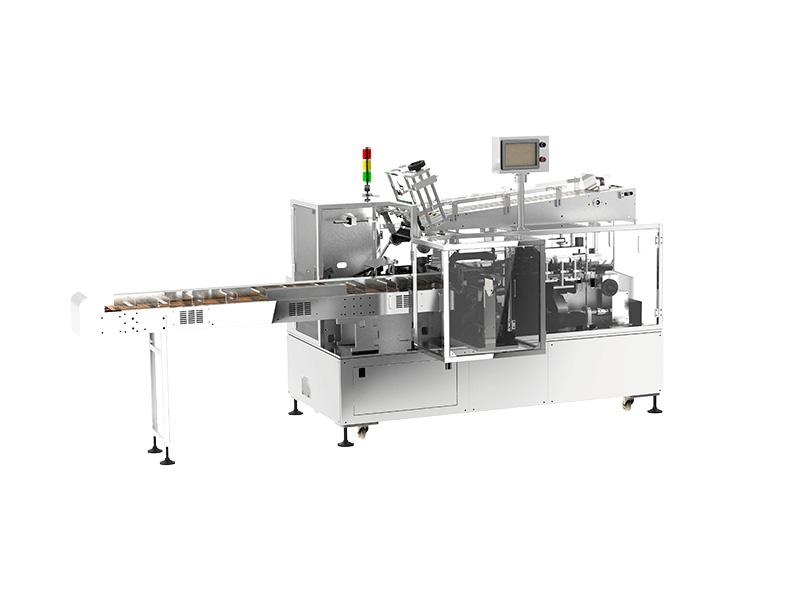
A snack cartoning machine automates the three operations that a manual station performs by hand, in one continuous cycle.
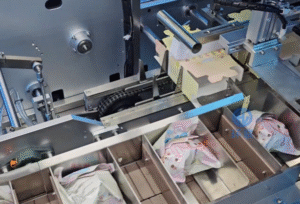
Flat blanks are pulled one at a time from a magazine, opened into a box shape by vacuum cups and folding guides, and locked into position at the bottom. The machine does this hundreds of times per hour without a single misfeed once the magazine is set correctly.
The opened carton travels to the loading station, where a servo-driven pusher transfers the product from the infeed channel into the box. This is the step that separates a well-engineered machine from a cheap one: the speed, acceleration, and stroke of the pusher must be adjustable so that fragile products are handled with the same care a trained worker would give them.
The filled box moves to the closing station, where the flaps are folded and secured — either by tucking them into the carton body (tuck-end) or by applying hot-melt adhesive (glue-seal) — before the finished carton is discharged onto the outfeed conveyor for labeling, metal detection, case packing, or palletizing.
Together, these three functions replace the work of four to six people at a typical snack packing station. The machine is also indifferent to the passage of time: output in the first minutes of a shift is identical to output in the final minutes, because every cycle follows the same mechanical timing and the same servo motion profile. There is no third-hour fatigue, no mid-shift slowdown, no variation caused by who happens to be standing at the station.
Snack cartons are not the same as cartons for pasta, canned goods, or frozen meals. Three characteristics set snack secondary packaging apart, and each one shapes how the machine must be configured.
A single snack line can run ten, twenty, or even fifty different SKUs in one month. Each SKU brings a different carton size, a different number of pieces per box, and often a different infeed format — wrapped bars in one case, flexible pouches in another, individually wrapped candies in a third. The machine has to accommodate this variety without slowing the line down between runs. That means tool-less changeover, with all setup parameters — infeed width, pusher depth, carton dimensions — stored as recipes in the HMI and recalled at the push of a button. On UBL standard machines, dimension adjustments within the same carton style are completed in under ten minutes, which is what makes them practical for plants that change products several times per shift.
Biscuits crack under excessive pressure. Chocolate bars develop hairline fractures when pushed too hard during loading. Energy bars wrapped in thin film can be punctured by an overly aggressive pusher. A snack cartoning machine designed for this category must therefore offer servo-driven pushers with adjustable speed and acceleration, tunable to the fragility of each product. The pusher profile for a delicate chocolate bar is gentler than the profile for a sturdy wrapped energy bar, and both are saved in the HMI, recalled automatically when the operator selects the corresponding SKU. Switching between fragile and robust products never requires touching a mechanical component.
Snack cartons live at eye level in the center of the aisle, in the most visible positions a supermarket has to offer. Shoppers see the box before they ever see what is inside it. A carton with crisp corners, flat flaps, and properly aligned display windows signals a quality product; a carton with crooked flaps, crushed corners, or a skewed window undermines the brand in the same glance. Mechanical closing applies the same force and geometry to every carton, eliminating the batch-to-batch variation that inevitably appears when different workers close boxes at different speeds and levels of care.
Nuts, seeds, and dried fruits typically reach the cartoning station inside sealed flexible pouches or resealable bags. Unlike rigid wrappers, these pouches vary in fill level and thickness from one to the next, which means the infeed channel must tolerate a degree of dimensional variance.
A snack cartoning machine handles this with an adjustable infeed guide that accepts a range of pouch thicknesses without any changeover tooling. For plants running multiple pouch sizes on the same line, the recipe-based changeover system stores the infeed dimensions for every SKU and restores them at the touch of a button; switching between two pouch sizes takes under ten minutes. This matters more than it may first appear, because pouch products are frequently packed for retail display in windowed cartons, where both the pouch and the box must look right together.
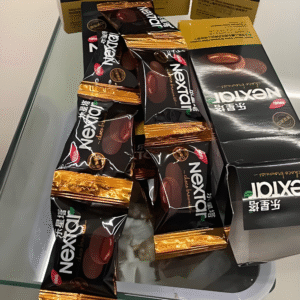
Between the end of your line and the consumer's hand, a snack carton passes through regional warehouses, distribution centers, and store back rooms, stacked, conveyed, and handled multiple times. A carton closed with inadequate tuck depth or uneven glue can pop open in transit, spilling product inside the outer case. Mechanical closing eliminates this risk by applying consistent closing force to every carton, so each box that leaves the outfeed conveyor meets the same structural standard.
For export shipments and long-haul distribution, the glue-seal configuration adds another layer of security. Hot-melt adhesive bonds hold up through temperature and humidity cycling, keeping the carton sealed from the production line to the end consumer. UBL glue-seal cartoning machines are fitted with internationally branded hot-melt applicators that hold consistent adhesive temperature and bead geometry through an entire shift — a detail that matters when a single shipment can spend weeks in transit across multiple climate zones.
For manufacturers running many SKUs on one line, changeover is not an inconvenience; it is a line item. Consider a plant with fifteen active SKUs and three format changes per week: that is more than 150 changeover events per year. If each change takes forty-five minutes on a manual line, the plant forfeits well over a hundred hours of production annually. A cartoning machine shrinks that loss dramatically. The operator recalls the correct infeed width, pusher depth, and carton dimensions from the HMI recipe library, fine-tunes the guide width with handwheels on the forming and closing modules while the target dimensions are displayed on screen, and the line is back to full speed in minutes. Printed setup sheets and manual measurements become obsolete.
One caveat applies to plants that use both tuck-end and glue-seal cartons: because the closing modules differ, switching between these two formats takes longer than a routine dimension change. UBL recommends configuring the machine for the carton style that represents the bulk of your volume, and handling the minority style on a separate line or through a planned module swap. The pre-purchase technical review includes a format-mix analysis that settles this question before you commit.
A snack cartoning machine is one link in a chain. Upstream, it must receive product from a flow wrapper, a bagging machine, or a manual accumulation table; downstream, it must deliver sealed cartons to labeling, metal detection, case packing, or palletizing equipment. Before specifying a machine, map the physical space between the upstream exit and the downstream entry. Note belt heights and transfer elevations at every interface, and confirm that the machine's infeed and outfeed conveyor heights match your existing line layout. UBL's installation team performs this mapping during the pre-sale technical review and provides a layout plan for facilities with tight floor space.
The speed relationship between adjacent machines deserves special attention on high-speed lines. If a flow wrapper delivers sixty units per minute and the cartoner is configured at forty cartons per minute, the infeed buffer must be sized to absorb the difference, or the line will stop. UBL engineers review your existing layout and upstream output rates before installation and set the cartoner's speed so that the buffer capacity matches the speed differential — rather than discovering the mismatch on the day of commissioning.
Carton closing quality is the most visible scorecard of a packaging line. Crooked flaps, uneven tucks, and misaligned corners tell a retailer that the product inside may not have been handled with care. In a manual station, closing quality depends entirely on the person doing the job: their skill, their fatigue level, and the pressure they are under. A seasoned worker who has closed tuck-end cartons for eighteen months produces clean boxes; a temp in their first week produces noticeably rougher ones — and the shipment carries the evidence.
A snack cartoning machine removes this variability altogether. The same closing force, the same tuck geometry, and the same cycle timing apply to every carton, from the first box of the morning to the last box of the night, regardless of which operator is monitoring the infeed. For brands sold through retail channels, where carton appearance is part of the product presentation, this consistency is not cosmetic; it is commercial. A shelf full of identically closed cartons reads as quality. A shelf full of inconsistent ones reads the opposite way.
The advantage is functional as well as visual. Cartons closed with the correct force and tuck depth maintain their seal through the distribution cycle; cartons closed too lightly may open during transport. Mechanical closing guarantees the former, every time.
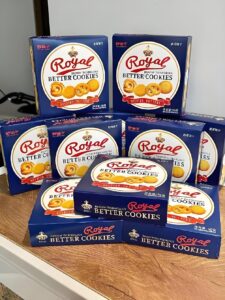
The labor market for packaging workers has tightened across most manufacturing regions, and snack production is among the hardest hit, because cookie, chocolate, and candy plants traditionally employ large numbers of people in repetitive manual packing roles. The pool of workers willing to take those jobs is shrinking, wage rates are climbing, and the trend shows no sign of reversing; it reflects a structural shift in the workforce rather than a cyclical dip.
Automation addresses this directly. A cartoning machine reduces the packing station from four to six workers to a single operator, and the operator's role is far less physically demanding than the folding and loading jobs it replaces — which makes the position easier to fill and retain. The economics of training shift as well. A new manual packer typically needs two to three weeks to reach full speed and accuracy; a new machine operator reaches independent operation within two to three days of installation training. For plants running year-round with seasonal peaks, the labor flexibility that automation provides can matter as much as the wage savings themselves.
UBL snack cartoning machines are built with stainless-steel construction, with smooth surfaces and minimal crevices where product debris could accumulate. The machine handles sealed primary packaging and does not touch edible product directly, but because it operates inside a food-grade production environment, the same sanitary design standards apply to its external surfaces and the area surrounding the product infeed. That means easy access for cleaning, food-safe materials throughout, and no hidden corners where crumbs can collect between washdowns.
A confectionery manufacturer producing individually wrapped chocolates in 12-piece and 24-piece retail cartons ran its secondary packing station with five people: two folding boxes, one loading product, and two closing flaps. The line operated at roughly twenty cartons per minute, and seasonal orders regularly pushed the crew into overtime.
After installing a UBL snack cartoning machine, the same station runs with one operator at approximately forty-eight cartons per minute. The four freed-up workers were redeployed to quality inspection and line monitoring roles rather than let go. The plant calculated the payback period at about one year, counting only the direct labor savings.
Three factors deserve scrutiny before purchase. First, carton compatibility: confirm the machine handles your actual carton blanks through a sample trial — dimensions, board grade, and closing style all need to be validated with the real materials. Second, product infeed: determine whether your product arrives at the cartoning station pre-grouped, individually oriented, or in bulk, because each case calls for a different infeed configuration. Third, line layout fit: verify belt heights, transfer points, and floor space with a layout drawing prepared by the supplier. UBL reviews all three during the pre-purchase evaluation and provides a documented layout plan before any commitment is made.
Routine maintenance on a snack cartoning machine is straightforward: lubrication of moving parts, inspection of belt tension, and cleaning of the blank magazine, all on a standard schedule covered in the two-hour operator training UBL delivers at installation. Most customers' operators handle routine maintenance on their own within the first week of operation.
UBL includes on-site installation, commissioning, and operator training as standard contract terms, along with a one-year warranty covering parts and labor. The training covers HMI operation, infeed procedures, routine maintenance, and troubleshooting of common carton-jam causes. For issues that cannot be resolved on site, UBL provides four-hour remote response support, minimizing downtime when unexpected problems occur.
The return on investment starts with direct labor. Depending on the regional market, a snack packing station running four to six workers across two shifts carries an annual labor bill of roughly USD 240,000 to 540,000, including wages and benefits. After automation, the same station runs with one operator per shift, cutting that cost to roughly USD 60,000 to 90,000 per year. The resulting annual saving of USD 150,000 to 450,000 recovers the machine purchase price within 10 to 16 months for most snack manufacturers.
Three indirect savings add to the total. Rework drops: manual stations typically produce a 1 to 3 percent carton defect rate from crooked flaps, misaligned tucks, and crushed corners, and a cartoning machine pushes that below 0.5 percent. Retail return risk falls, because consistent carton quality reduces buyer complaints. And the plant becomes independent of labor market swings — no emergency recruiting when order volumes spike. UBL provides a documented ROI calculation tailored to each client's labor cost structure, shift pattern, and target output before purchase.
Can one machine handle both biscuits and chocolate bars?
Yes. A snack cartoning machine with adjustable infeed lanes and HMI-stored recipes handles multiple product formats, with changeover between product types in under ten minutes.
Is there a minimum order quantity for carton blanks?
No. UBL imposes no minimum; the machine draws blanks from a magazine that accepts whatever quantity fits.
How long does installation take?
Installation and commissioning are typically completed in one to two days, with operator training taking about two hours.
Is remote support available?
Yes. UBL provides four-hour remote response support for issues that cannot be resolved through on-site troubleshooting.
What warranty is included?
Every machine purchase includes a one-year warranty covering parts and labor.
UBL supports sample trial runs before purchase. Send us 50 to 100 pieces of your wrapped product and 20 to 30 of your carton blanks, and our engineering team will run a test cycle on the appropriate machine configuration, documenting the results on video: carton closing quality, cycle speed, loading consistency, and any format adjustments required. You are also welcome to visit our facility and watch the trial in person. The trial is free of charge and carries no purchase commitment.
Standard machine configurations are available for dispatch the next business day after contract signing. Custom configurations for non-standard carton dimensions or specific line integration requirements are typically delivered within three months of design confirmation. Installation and commissioning are included in the purchase price, and on-site operator training takes approximately two hours.

 Guangdong Huanlian intelligent Packaging Group Co., LTD
 86-15915757872
 86-13602308576
 sales@huanlianauto.com
 No. 7, Silver Lake Road, Sangyuan Industrial Zone, Dongcheng District, Dongguan City
 Back to top


 86-15915757872